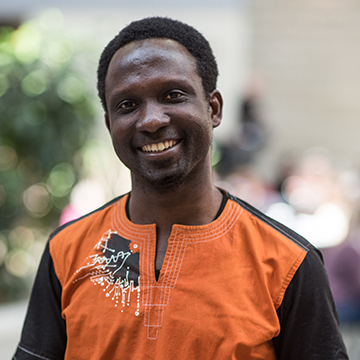
Be patient with yourself. As a student your job is to learn, and by necessity, fail. Solving the problem and having the right answer isn't always the same thing.
Smart or slow, doesn't really matter in the end, the point is everyone has their own time zone, all you have to have is your own balance of work, play, and all other stuff, the others don't really matter.
I lived in Ridgetown as this is where my research was conducted. Although Ridgetown does not have much infrastructure in comparison to the City of Guelph, it has large acres of land for research in agriculture. I sometimes enjoyed a tour on the vast land with various research work going on. Personally, I think Ridgetown may be the town with the kindest people I have met, and I know the same is true for the City of Guelph.
Words of wisdom for someone considering grad school...
My advice would be to not be afraid to try anything. Take any opportunities you have for new experiences because you never know what you will end up liking! If I had not tried a wide variety of courses during my time at the University of Guelph, I would not have discovered my interest in reproductive biology. Also, take any opportunity you can to speak with other graduate students; everyone is extremely friendly and always willing to lend a hand if you need it. Your peers are a great resource and are always willing to offer some advice on school, research, or life.
Get involved in the community. Grad school is more than your research project; expand your contributions beyond your field of research and into the community where you are working.
“Since I immigrated to Canada from Bangladesh in 2001 I have been living in Guelph. I cannot think of a city better than Guelph. People here are very friendly and dedicated to making their city a better place Guelph has a nice blend of rural and urban atmosphere; it's not too big or too small.”
I feel lucky to have been able to be involved in many different projects at the University of Guelph. My advice to future grad students is to get involved in as many different things as you can and to not be afraid to reach out to people. A lot of the fun in a graduate degree is being able to collaborate and work with lots of different people.
Guelph offers great graduate programs for students that may or may not have research experience. What I have found is that faculty members are very willing to meet with students, and are available to talk about their research and to provide insight about what graduate school encompasses. In addition, getting to meet with current graduate students to talk about what their research is about is definitely an option here at the University of Guelph. I have found that many students are afraid to contact faculty members, but I found it to be very easy and helpful to reach out to the Faculty at Guelph. The University of Guelph definitely has the support system to help students get of glimpse of what graduate school has to offer.
When an airline asks you to sign a waiver for your guitar just scribble quickly in hard to read handwriting "no thank you" and hand it back. Later if they damage your equipment you can claim you did not understand why they handed that waiver to you.